
Despite their names, most people who develop tennis elbow or golfer’s elbow have never picked up a racquet or club. These conditions result from overload of the forearm tendons at their attachment to the elbow. They are among the most common upper limb complaints seen in musculo-skeletal practice and respond well to a structured, evidence-based rehabilitation approach. Our team has extensive clinical experience with both conditions.
What Is Tennis Elbow (Lateral Epicondylopathy)?
Tennis elbow, formally known as lateral epicondylopathy, involves degeneration and failed healing within the extensor tendons of the forearm, most commonly the extensor carpi radialis brevis (ECRB). Modern understanding recognises this as a tendinopathy: a degenerative process with disorganised collagen and impaired tissue remodelling, often exacerbated by ongoing load. It is common in people who perform repetitive gripping, lifting, or computer mouse use.
What Is Golfer’s Elbow (Medial Epicondylopathy)?
Golfer’s elbow, or medial epicondylopathy, involves the common flexor tendon origin on the medial side of the elbow. It is associated with repetitive forearm flexion and pronation, common in throwing athletes, golfers, climbers, and those performing manual labour or heavy lifting. Ulnar nerve irritation (causing tingling in the ring and little finger) sometimes accompanies medial epicondylopathy.
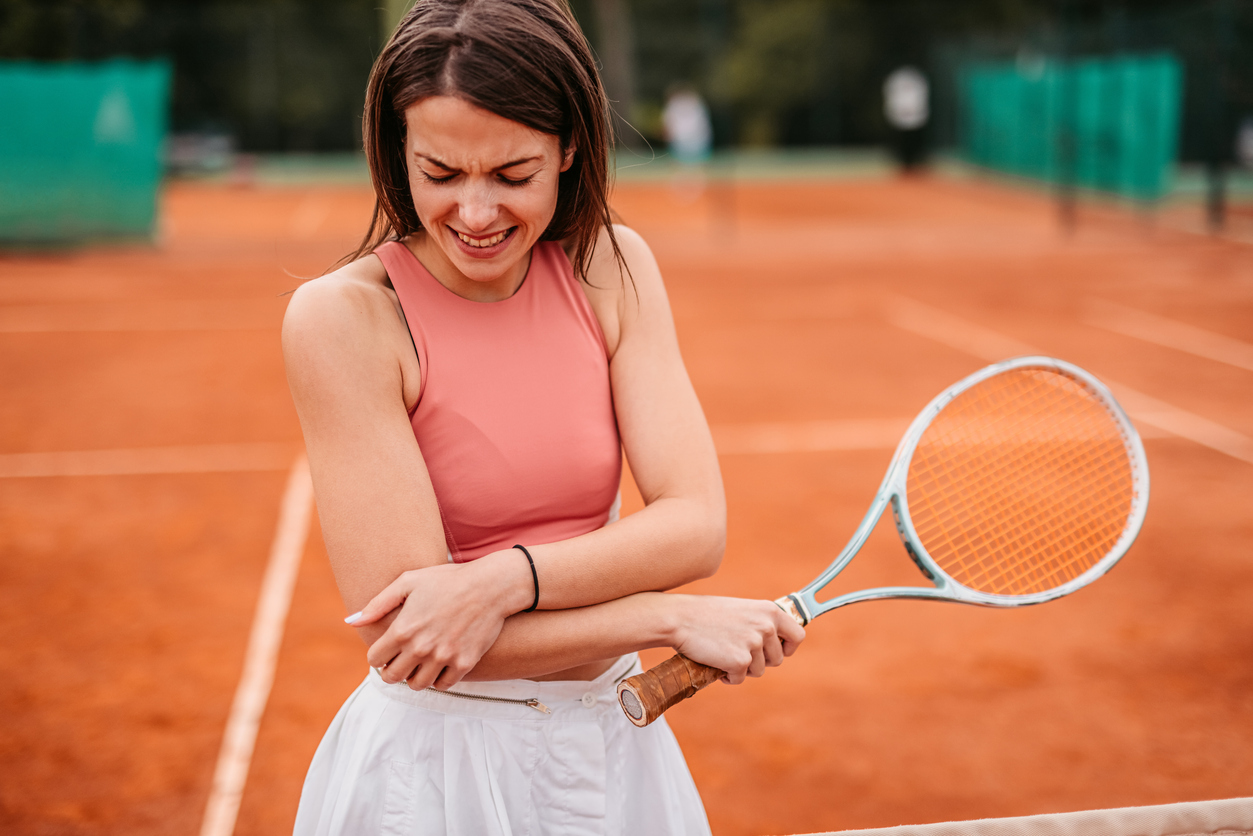
Symptoms
- Tennis elbow: lateral elbow pain aggravated by gripping, lifting, extending the wrist, or shaking hands. Pain may radiate down the forearm.
- Golfer’s elbow: medial elbow pain and tenderness aggravated by wrist flexion, forearm pronation, and gripping. Possible tingling in the ring and little finger.
- Stiffness in the elbow, particularly in the morning or after periods of rest.
- Weakness in grip strength.
What We Do Differently
Traditional management (rest, ice, anti-inflammatories) addresses symptoms without addressing the underlying tendon pathology. At Waterloo Chiropractic, our approach is structured around the best available evidence for tendinopathy management. Our blog on combining chiropractic care with a strength training programme explains how active rehabilitation complements hands-on treatment:
- Tendon loading rehabilitation using graded isometric, isotonic, and heavy slow resistance exercises, which have the strongest evidence base for tendinopathy recovery.
- Soft tissue therapy including deep transverse friction massage and myofascial release to the forearm musculature.
- Dry needling, effective for reducing local pain and improving tissue healing responses.
- Cervical and elbow joint assessment, as referred pain from the cervical spine and restricted radial head mechanics can both perpetuate lateral elbow symptoms.
- Load management and technique modification including advice on activity modification and how to progress loading without aggravating symptoms.
How Waterloo Chiropractic Can Help
At Waterloo Chiropractic, we manage tennis elbow and golfer’s elbow as tendinopathies, not as inflammatory conditions. That means our treatment is structured around progressive tendon loading from the outset, not rest and anti-inflammatories. This distinction matters because tendons do not heal well with rest alone; they need carefully graded load to stimulate tissue remodelling and restore function.
Your initial assessment will establish the diagnosis, identify the stage of tendinopathy, assess grip strength, examine the cervical spine and radial head for contributing factors, and determine your current load capacity. From there, we build a structured rehabilitation programme that progresses systematically from isometric loading through to full return to your aggravating activities.
Hands-on treatment including soft tissue therapy and dry needling is used to reduce pain and improve tissue extensibility alongside the loading programme, not instead of it. Recovery from tendinopathy is measured in months, but with the right approach most people achieve full resolution. Our team has extensive experience managing upper limb tendinopathies across a broad range of patients and activities.
Do not let elbow pain become a long-term limitation. Book online or call (02) 9690 0911. Shop 265, 8 Lachlan St, Waterloo NSW 2017.